

Shady gardens can pose a challenge to even the most creative gardeners. With limited light, sun-loving plants that make buckets of blooms or delicious fruits just won’t succeed. And all too often the usual suspects for shade gardening can feel basic and boring. By embracing a new range of plants with unusual foliage textures and colors, and unexpected blooms, you can create a beautiful, fragrant, and unique space, no matter the size of your shade garden.
Here are our favorite unsung heroes of the understory—add one to your existing shady landscape, create new low-light container combinations, or mix them all for a chic, high-impact, and low-maintenance shade garden!
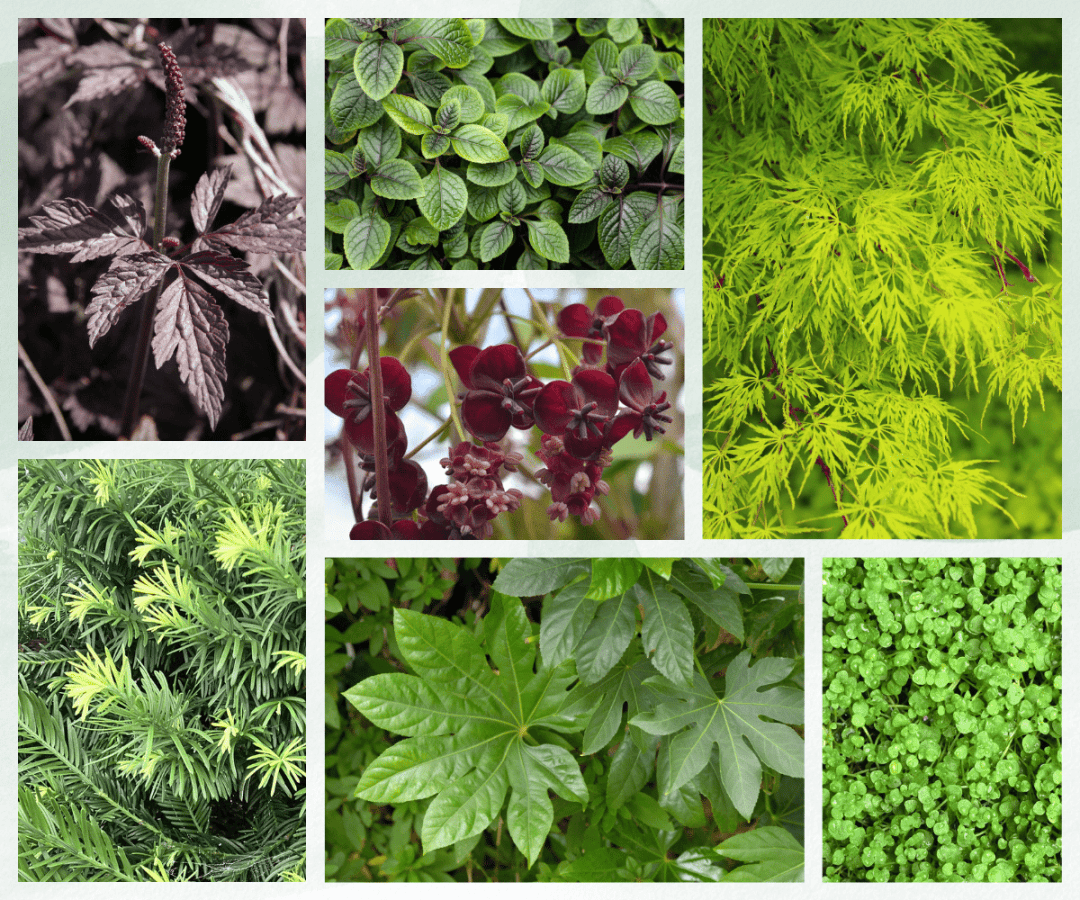
1. Shade Tree: Green Laceleaf Japanese Maple (Acer palmatum ‘Seiryu’)
Feathery, delicate foliage floats from the layered branches of this upright Japanese Maple. With leaves that emerge acid green and mature to a pale grass-green in Summer, Acer palmatum ‘Seiryu’ and delicate varieties like ‘Koto No Ito’ or even striking Coral Bark Maples are perfect for enlivening corners of small, dark gardens.

In Autumn, the leaves will put on a beautiful display of tawny reds before dropping to expose green bark for a strong structural impact all Winter long. In areas where soils are poor, plant Seiryu in a large container for an elevated focal point. This shade tree is slow growing to 10–15 feet tall and 6–8 feet wide with minimal pruning required.
2. Shade Shrub: Japanese Aralia (Fatsia japonica)
An evergreen shade plant with undeniable impact, Fatsia japonica sports large, glossy rich green leaves and stands out in even the darkest environments. Fatsia leaves can reach up to 12 inches across and have a decidedly tropical look. Lean into the rich green tones of the straight Japanese Aralia, or introduce unique variegation into your planting schemes with ‘Camouflage’ or ‘Spider’s Web’ varieties.

Though they aren’t the main draw in growing Aralia, unusual, cream-white pom-pom flowers form in the Summer and are followed by black ornamental berries. In the landscape, Fatsia makes the perfect backdrop to shorter plants or can stand alone for a more modern look. Japanese Aralia is fast growing to 8 feet tall and 6–8 feet wide and can be pruned as needed or cut back hard to regenerate from the base.
3. Shade Conifer: Korean Yew (Cephalotaxus sp.)
Long, soft needles of this versatile conifer line each dense and resilient branch of this low-growing shrub or upright, columnar plant. New growth emerges lighter green, providing attractive contrast to the deep green of the more mature foliage. ‘Duke Gardens’ is a low-growing male plant and will not produce fruits, making it ideal for gardens with children, while ‘Fastigiata’ provides a sturdy upright form ideal for hedging or container centerpieces.

Plant any form of Cephalotaxus as a stand-alone for a pop of texture against a simple backdrop, or use it as a hedge to surround seating areas. These conifers are slow growing, so start with a larger plant initially to achieve the desired look. Keep its shape natural by tip pruning or shear the shrub for a hedge or topiary.
4. Shade Vine: Five-Leaf Chocolate Vine (Akebia quinata)
True-green, compound leaves in delicate groupings of five extend from the twining stems of Akebia quinata. Evergreen during mild winters, this vine can tolerate deep shade better than almost any other vine! Small, wine-purple cupped blooms appear on the straight A. quinata, while ‘Shirobana’ has lovely creamy white blooms.

Flowers carry a light fragrance and bloom on old wood developed during the previous growing season. Plant on a trellis to add a blanket of greenery to a north-facing wall or fence. Five-Leaf Chocolate Vine is fast-growing to 40 feet tall and should be pruned in Summer following flowering.
5. Shade Perennial: Bugbane / Cimicifuga (Actaea)
Dark, bronze-black serrated foliage fans out from graceful stems on Actaea, formerly known as Cimicifuga. Actaea produces wands of blush-white flowers that extend above the foliage and bring their intoxicating fragrance into dark gardens. We like 'Hillside Black Beauty' and 'Pink Spike' for the way both their foliage and flowers complement other standard shade perennials like Hostas, Hellebores, or Ferns.

Actaea dies back in the Winter and emerges from the ground each Spring, producing textural and striking foliage that combines well with other shade perennials and shrubs. This herbaceous plant has moderately growing foliage to roughly 2.5 feet with flower spikes 4–6 feet tall. Cut back the entire plant after frost and mulch in colder climates.
6. Shade Groundcover: Corsican Mint (Mentha requienii)
Low-growing to form a dense mat of tiny, evenly green leaves, Corsican Mint is the ideal groundcover for dark garden areas. The leaves are cool and soft to the touch and release an intense, sweet fragrance that fills gardens when stepped on or watered.

Planted between stepping stones, along walkways, or under perennials and shrubs, Corsican Mint will travel through the garden as it pleasantly reseeds itself each year. Though not evergreen, the groundcover will add gorgeous dimension to any planting from Spring through Fall. This herbaceous groundcover is creeping or reseeding to 12 inches wide and 0.5 inches tall with no pruning or cleanup required.
7. Shade Annual (and Houseplant!): Swedish Ivy (Plectranthus sp.)
The fleshy, firm leaves of Plectranthus are rich green, as is the case with ‘Nico’, or variegated (we think ‘Guacamole’ is exceptionally pretty) with lovely purple accents on the top and underside. Stems extend from the center to form lateral arms with textured foliage that make this annual a perfect complement to add bulk each season to existing landscape plants or containers.
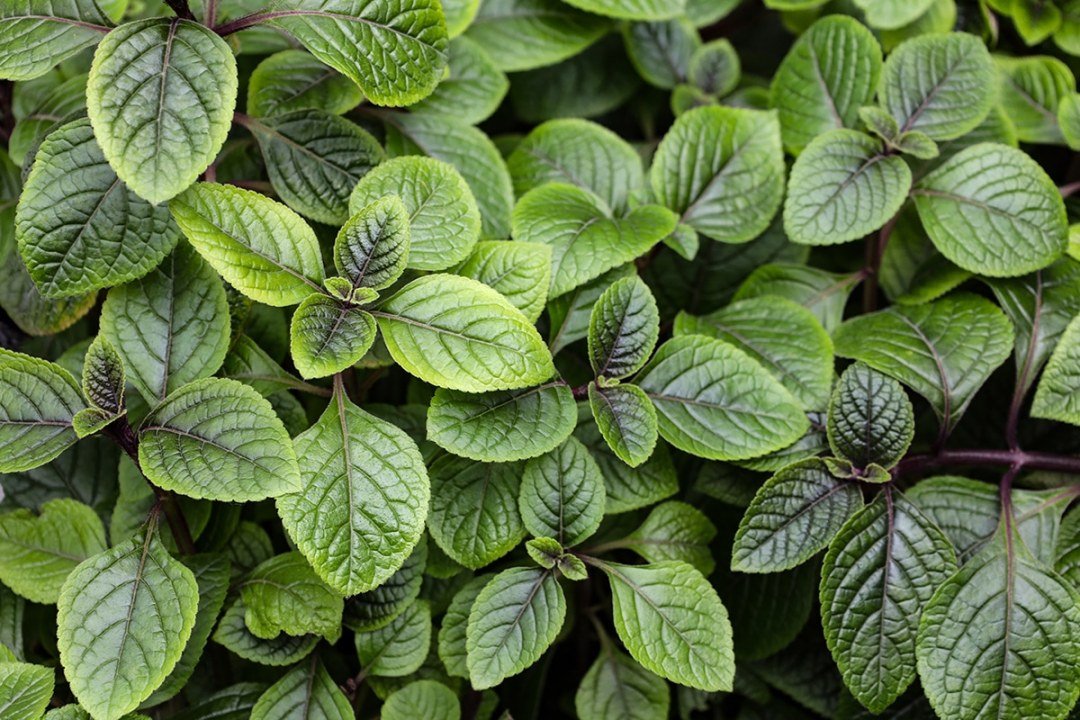
Swedish Ivy is ideal for planting at the front of borders, as a filler around the edges of containers, or as a mass planting in a low bowl to form a chic centerpiece for outdoor dining tables—plus it works in sun or shade! Easy to propagate by cuttings, Pletranthus pieces or whole plants can be brought indoors to live as a houseplant until April when Winter. If not brought indoors, the plant will die completely in the frost, so grow it as a fast-growing annual. In a single season Swedish Ivy will reach 8–12 inches tall and 12–24 inches wide.
Visit our companion blog to learn more about how to design a shade garden and see a full list of common shade plants: How to Design A Shade Garden in the Pacific Northwest. Wondering how to bring something interesting to the sunny areas of your landscape? Explore our favorite 7 Underappreciated Sun Plants for the Garden!